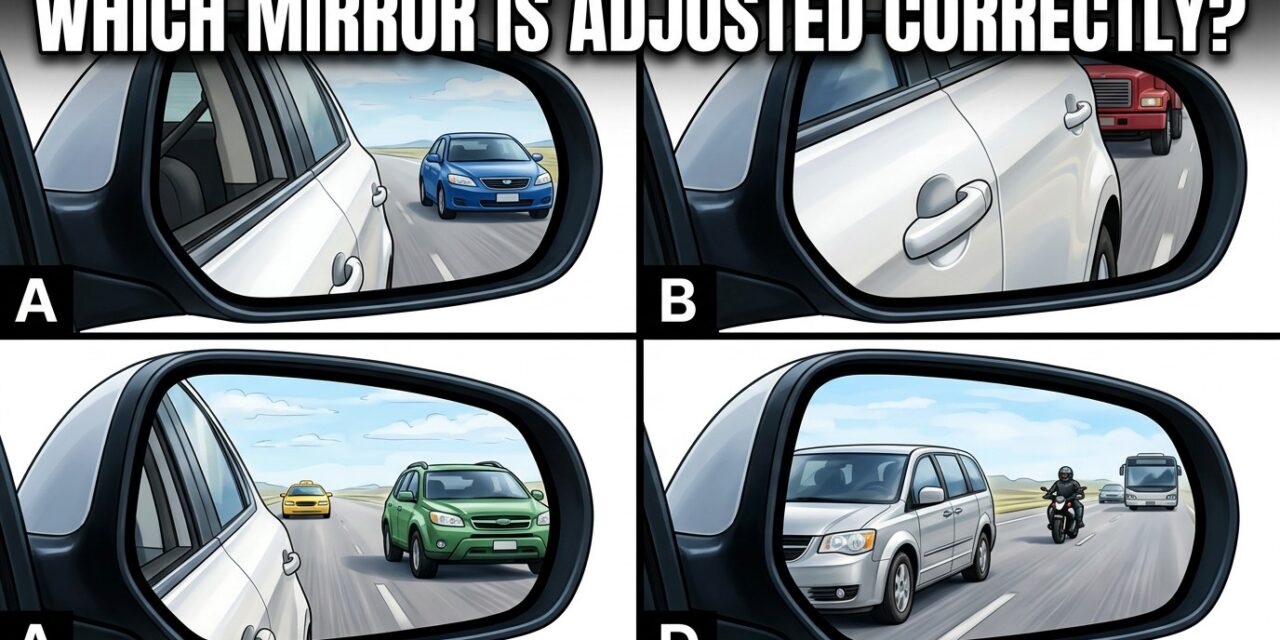

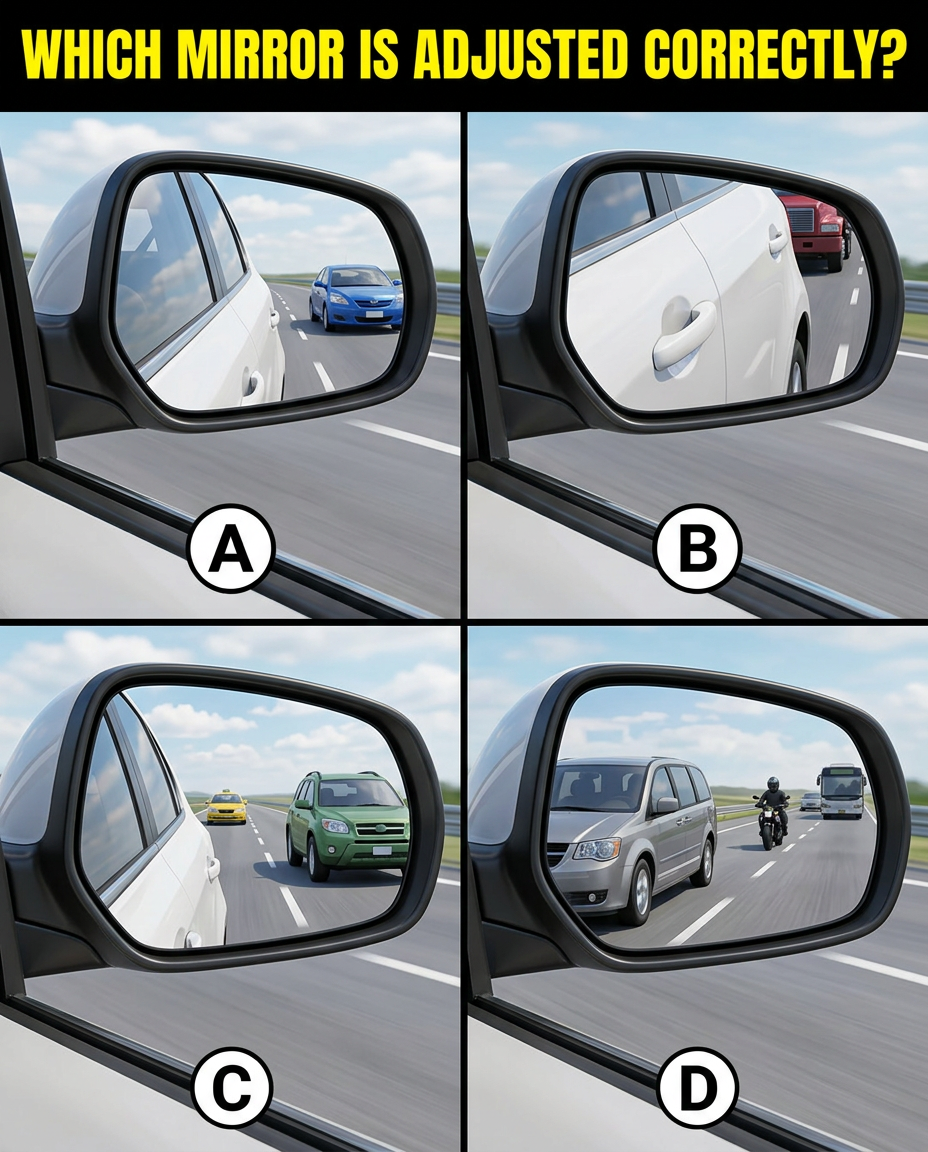
At first glance, all four mirrors in the image might seem reasonable.
The reason comes down to what your side mirrors are actually supposed to do.
Many drivers adjust their mirrors inward so they can see a large portion of their own car. It feels reassuring because it gives you a reference point—but it also wastes valuable mirror space. Your side mirrors are most useful when they cover the areas beside and slightly behind your vehicle, where another car, motorcycle, or bicycle can disappear from your normal field of view.
That’s why A, B and C are angled too far inward. Each shows a significant portion of the white vehicle itself. The more of your own car you see, the less roadway the mirror can cover.
Mirror D is angled farther outward, giving the driver a much wider view of traffic in the neighboring lanes. That positioning helps reduce the size of the traditional blind spot.
This is consistent with guidance from the National Highway Traffic Safety Administration. NHTSA recommends adjusting the outside mirrors farther outward to maximize visibility alongside the vehicle and minimize blind spots. NHTSA
AAA teaches a similar technique. For the driver-side mirror, you can lean your head toward the window and adjust the mirror until you can just barely see the side of your vehicle. For the passenger mirror, lean toward the center console and do the same. Once you return to your normal seated position, the mirrors will be aimed considerably farther outward than many drivers are accustomed to.
That doesn’t mean mirrors eliminate every blind spot. You should still glance over your shoulder before changing lanes, especially around motorcycles, bicycles and smaller vehicles. NHTSA specifically recommends that additional check even with properly positioned mirrors. NHTSA
The answer: D
The goal isn’t to admire the side of your own car. It’s to see the traffic you otherwise might miss.
And if your mirrors currently look more like A, B or C, you may want to adjust them before your next drive.